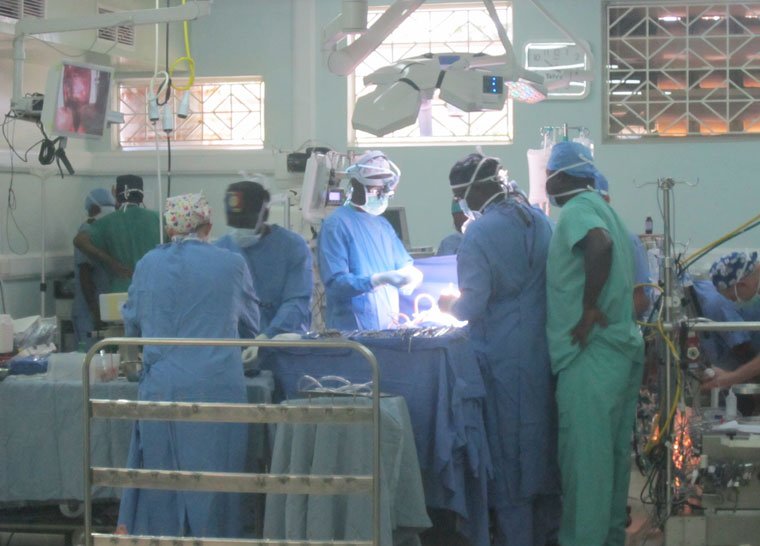
Mulago National Referral Hospital has made a groundbreaking announcement, planning to introduce liver transplant services next year, a move expected to greatly benefit hundreds of patients struggling with advanced liver diseases that require specialized surgical intervention.
The hospital's executive director, Dr. Rosemary Byanyima, revealed that Mulago has already identified several patients with chronic liver conditions through its specialized clinics who are in urgent need of transplantation.
Byanyima announced a strategic partnership with Yashoda Hospital in India, whose specialists will collaborate closely with Mulago's medical teams to carry out Uganda's first-ever liver transplant.
She stated that Mulago has dispatched multidisciplinary teams to India and the United Kingdom for one-month training programs aimed at strengthening capacity ahead of the rollout.
Upon their return, the teams will begin screening patients after refreshing their skills in the procedures, protocols, and preparations required for liver transplantation.
Mulago has successfully conducted three kidney transplants, marking a milestone for the hospital's organ transplant program.
Both donors and recipients are reported to be in stable condition.
Funding and staffing constraints pose significant challenges
Byanyima appealed to the government and the Ministry of Health to increase funding, noting that demand for specialized services is expected to rise significantly once liver transplants commence.
"We have been operating in a camp mode, where teams are mobilized to carry out procedures and then return to their respective units," she said. "However, we want transplant services to be continuous. This requires permanently stationed staff, which in turn calls for improved remuneration."
She noted that Mulago currently receives a mere Shs 8.6 billion from the National Medical Stores (NMS) for essential medicines and sundries, compared to an estimated optimal requirement of about Shs 35 billion.
The hospital's annual budget for patient medicines stands at Shs 23 billion, against a projected need of Shs 101 billion.
Byanyima said the funding gap limits service delivery and, in some cases, forces patients' attendants to purchase items the hospital is unable to provide.
She also raised concern over understaffing, saying current staffing levels stand at 57 per cent, which continues to affect service delivery in some departments.